
You’ve been paying Edward Jones fees for years, and someone just told you that Fidelity does the same thing for less. Or maybe for free. You’re suspicious — free usually means you’re the product — but you’re also tired of watching front-load commissions eat into every contribution.
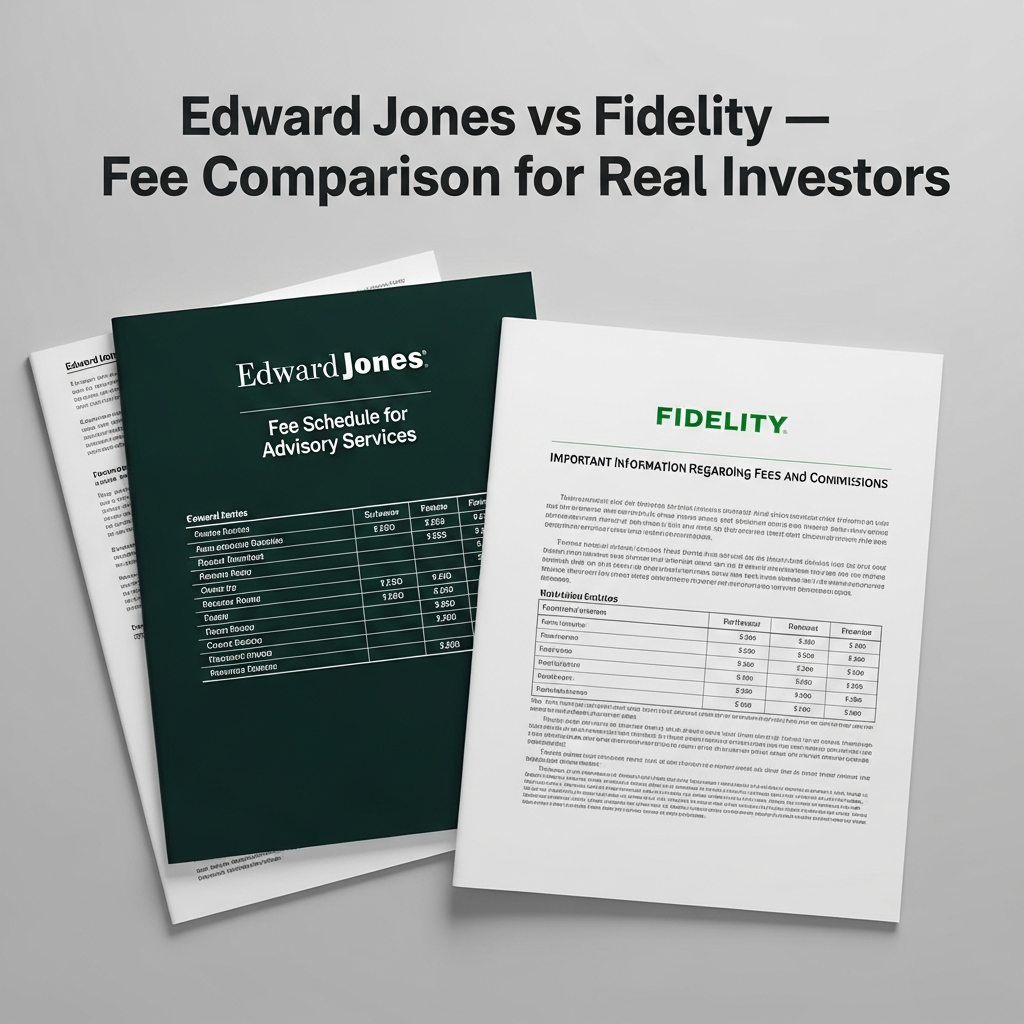
The Edward Jones vs Fidelity comparison isn’t really apples to apples, though. These two firms serve investors in fundamentally different ways, and the cost difference only tells part of the story.
The Core Difference: Full-Service vs Do-It-Yourself
Edward Jones is a full-service brokerage. You get a dedicated financial advisor in a local office who picks investments, builds a plan, and manages your account. You pay for that human being’s time, expertise, and attention — primarily through commissions on the products they sell you and, increasingly, through advisory fees on managed accounts.
Fidelity is a direct-to-investor firm that offers both self-directed accounts and advisory services. The self-directed side lets you buy stocks, ETFs, and Fidelity’s own mutual funds with zero commissions and zero account minimums. They also offer advisory services — Fidelity Go (robo-advisor), Fidelity Personalized Planning (hybrid), and Fidelity Wealth Management (dedicated advisor) — at various price points.
The question isn’t really which firm is “better.” It’s whether you need a person to manage your investments or whether you’re willing to do it yourself. That answer changes the math completely.
Fee Comparison: What You Actually Pay
Edward Jones’s traditional model relies on mutual fund commissions. Their preferred share classes carry front-end loads of up to 5.75%. On a $10,000 investment, that’s $575 gone before your money does anything. They also offer fee-based advisory accounts at roughly 1.35% to 2% annually, depending on account size.
Fidelity’s self-directed accounts cost essentially nothing. Zero commissions on stocks and ETFs. Several Fidelity index funds charge zero expense ratios — literally 0.00%. Their robo-advisor, Fidelity Go, charges 0.35% annually for accounts over $25,000 (free below that). Fidelity Personalized Planning starts at 0.50% annually. Even their full-service wealth management comes in around 0.50% to 1.50%, well below Edward Jones’s fee-based pricing.
The cost gap is substantial. An investor putting $500 per month into a mutual fund through Edward Jones — paying 5.75% front load — loses roughly $345 annually to load fees alone. That same $500 monthly into a Fidelity zero-fee index fund loses nothing. Over 20 years, accounting for the compounding of those lost dollars, the difference grows to tens of thousands.
What You Get for the Extra Cost at Edward Jones
To be fair, Edward Jones provides something Fidelity’s self-directed platform doesn’t: a human being who knows your name, reviews your portfolio, and calls you when the market drops 10% to talk you off the ledge. For some investors, that’s worth every penny of those commissions.
Your Edward Jones advisor will sit down with you annually (or more often if you ask), review your asset allocation, recommend adjustments, and handle the execution. They’ll talk you through life changes — job loss, inheritance, divorce, retirement — and adjust your strategy accordingly. That hand-holding has measurable value for people who would otherwise panic-sell during downturns or never rebalance at all.
But here’s the rub: Fidelity offers advisory services too. Their wealth management service provides a dedicated advisor for roughly half the cost of Edward Jones. And their hybrid digital-human advisory option at 0.50% annually covers most of what a typical Edward Jones client actually uses their advisor for.
Investment Selection
Fidelity wins this category easily. Access to thousands of mutual funds and ETFs from every major provider, zero-commission stock trading, options trading, bonds, CDs, crypto, international stocks. Their research tools, stock screeners, and educational content are among the best in the industry.
Edward Jones offers a narrower menu focused on mutual funds, annuities, bonds, and individual stocks. No options trading. No crypto. Limited ETF access compared to Fidelity. The investment selection is adequate for a simple retirement portfolio but restrictive if you want anything beyond mainstream products.
The Verdict
For cost-conscious investors willing to spend a few hours learning the basics of index fund investing, Fidelity is the clear winner. The fee savings over a career of investing are genuinely life-changing — we’re talking potential six-figure differences over 30 years.
Edward Jones makes sense for one specific investor: someone who will not manage their own money under any circumstances, who wants a local person to meet with face to face, and who values that relationship enough to pay a significant premium for it. That investor exists — there are millions of them. But if you’re reading this comparison and asking questions about fees, you’re probably not that person. And if you’re not that person, Fidelity saves you a fortune.




Stay in the loop
Get the latest wealth rollover updates delivered to your inbox.