
“`html
The Short Answer — Yes, But Your Employer Plan Controls It
Can you roll over a 401k while still employed? Yes. The IRS allows it. But here’s the part nobody talks about loudly enough: your employer’s plan document gets the final say.
I discovered this the hard way when I called my HR department asking to move $87,000 from my company’s 401k to an IRA. They said no. Not because I wasn’t allowed under federal law, but because our plan didn’t permit in-service rollovers. That’s when I learned that roughly half of employer plans actually offer this option. The other half? They don’t. Period.
This is the misconception that trips up most people — they assume being trapped in a 401k until they quit is just how retirement savings works. It’s not. But it’s also not automatic. Your plan either allows in-service rollovers, or it doesn’t. That’s where we start.
What Is an In-Service Rollover? In Essence, It’s a Distribution While You’re Still There
An in-service rollover is a distribution from your 401k that happens while you’re still actively employed by the company sponsoring the plan. You’re not fired. You’re not retiring. You’re just moving money out. But it’s much more than that — it’s a workaround that most companies don’t actually allow.
Frustrated by restrictive retirement plan rules, the IRS opened the door for in-service rollovers back in 2001. But they’re not mandatory for employers. Each employer can decide whether to allow them. Think of it like this: the law permits it, but your company’s benefits committee chooses whether you get access.
To qualify for an in-service rollover, three conditions typically apply:
- You must be age 59½ or older, or your plan allows rollovers for other reasons (some plans are more permissive)
- You remain employed by the company — meaning you haven’t been terminated, laid off, or separated from service in any official capacity
- Your plan’s document explicitly permits in-service rollovers — this is the gatekeeper
“Still employed” has a specific meaning in retirement law. It doesn’t mean you showed up to work yesterday. It means you’re on active payroll, receiving compensation, and haven’t been separated from service. If you took a leave of absence, got laid off but stayed on severance, or transitioned to a contractor role, you might not qualify. That detail matters.
Some newer 401k plans also allow in-service rollovers for designated Roth accounts specifically — at least if the traditional pre-tax side doesn’t permit them. That’s a wrinkle worth checking.
How to Find Out If Your Plan Allows In-Service Rollovers
You need to ask. Directly. And you need to ask HR, not your coworkers or your plan’s website.
Here’s the process I’d recommend:
- Contact your HR or benefits department and ask to speak with someone who handles 401k plan administration
- Request a copy of your plan’s Summary Plan Description (SPD) — this is the document that explains what your plan allows
- Ask this specific question: “Does our 401k plan permit in-service distributions or in-service rollovers for active employees?” Don’t ask if rollovers are allowed generally. Specify in-service.
Sample language you can use: “I’m interested in rolling over a portion of my 401k to an IRA while remaining employed here. Can you tell me if our plan document allows in-service rollovers, and if so, what the process is?”
Most HR representatives will either confirm it’s allowed or direct you to a benefits advisor who can clarify. Some plans require you to work with the plan’s custodian or a third-party administrator to process the request. Don’t be surprised if they need paperwork or take a few business days to respond.
Here’s what usually happens next: they’ll tell you no. Many plans don’t allow them. If that’s your situation, you have two paths forward — you either wait until you separate from service (then you can roll it over whenever you want), or you accept that your money stays in that 401k until then. There’s no workaround to force a plan to permit what it doesn’t allow.
The Step-by-Step Process to Roll Over While Employed
Assuming your plan allows in-service rollovers, here’s how to actually execute one.
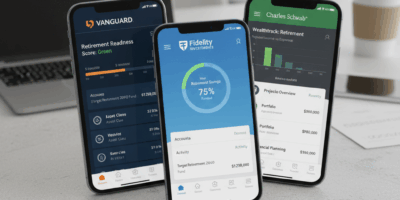
Step 1: Choose your receiving institution. You’re rolling money out of your employer’s 401k into somewhere else. That’s typically an IRA you open at a brokerage like Fidelity, Schwab, or Vanguard — at least if you want solid investment options and reasonable fees. It could also be a new employer’s 401k if you’ve changed jobs and your new employer allows incoming rollovers (most do). Decide before you contact your old plan.
Step 2: Contact your 401k plan administrator. This might be your HR department, a third-party administrator, or the plan custodian. Ask them to initiate a direct rollover. The keyword here is “direct.” You want the money to move directly from your 401k custodian to your new IRA custodian. You should never see the check. That part is critical.
Step 3: Complete the rollover documentation. You’ll need to sign a rollover authorization form. The plan administrator will coordinate with your IRA custodian. Paperwork usually takes two to four weeks, though I’ve seen it happen in as little as ten days. Direct rollovers are cleaner than indirect ones, and I’ll explain why in a moment.
Step 4: Verify the deposit. Once your IRA custodian receives the funds, confirm the amount matches what was supposed to roll over. Mistakes happen. I once saw a rollover missing $3,000 because of a data entry error — the plan administrator had transposed two digits. It took three weeks to fix.
Why “direct” matters: If you take an indirect rollover, the plan writes you a check. You have 60 days to deposit it into the IRA yourself. If you miss that deadline by even one day, the IRS treats it as a taxable distribution and you owe income tax plus a 10% early withdrawal penalty (unless you’re over 59½). Direct rollovers bypass this trap entirely. The money moves institution-to-institution. No 60-day clock. No temptation to spend it.
Common Mistakes and Tax Traps to Avoid
Probably should have opened with this section, honestly. The mistakes I’ve seen cost people thousands.
Missing the 60-day window. This only applies to indirect rollovers, but it’s catastrophic if you slip up. The IRS doesn’t care why you missed it. Mark your calendar. Set a phone reminder. If it’s been 59 days and you haven’t deposited the check, deposit it immediately. I’m apparently the kind of person who sets two reminders, and it works for me while my colleague just forgot and ate a $12,000 tax bill.
Mixing pre-tax and Roth money incorrectly. Your 401k probably has both pre-tax contributions (the money your employer matched) and possibly Roth contributions. You can’t roll pre-tax money into a Roth IRA. You can only roll pre-tax into a traditional IRA or another pre-tax 401k. Roth goes to Roth. If you accidentally reverse this, you’ll face a tax bill for conversions you didn’t intend. Don’t make my mistake.
Forgetting about employer match vesting. When you roll over your 401k contributions, that’s always yours. Employer match money? That depends on your vesting schedule. If you’re not fully vested, you forfeit the unvested portion. You can only roll over what’s actually yours. Check your vesting schedule before you start — many companies use a four-year graded schedule, meaning you earn 25% each year.
Triggering an unexpected tax bill because your plan doesn’t withhold correctly. With indirect rollovers, your old plan is required to withhold 20% federal tax. If you wanted to roll over $100,000, they send you $80,000 and withhold $20,000. You then have 60 days to deposit $100,000 into your new IRA or face penalties on the $20,000 that was withheld. Most people don’t have an extra $20,000 lying around. Use direct rollovers to avoid this entirely.
When You Might Not Want to Roll Over While Still Employed
Just because you can doesn’t mean you should. Strategic timing matters.
You’re not fully vested yet. If your employer match vests on a four-year schedule and you’re only three years in, wait. Rolling over early forfeits the final year of matching contributions. That’s free money walking away. Why leave it on the table?
Your plan has better investment options than an IRA would offer. Most 401k plans have limited fund choices, but some large employers offer institutional-class funds with lower expense ratios than anything available in an IRA. If your plan is one of these, the 401k might actually be the better home for that money. Vanguard Institutional funds, for example, often charge 0.05% compared to 0.10% for retail versions.
You’re planning to leave your job soon anyway. If you’re quitting in six months, why process an in-service rollover now? Just wait until you separate. You’ll have more flexibility in how you roll things over, and you avoid the administrative hassle twice. That’s just logic.
You have company stock in your 401k with significant gains. There’s a special tax strategy called Net Unrealized Appreciation (NUA) that only applies to company stock. In-service rollovers can complicate this. If your 401k holds company stock worth materially more than you paid for it, talk to a tax professional before rolling anything over. This is the one area where timing and strategy interact in surprising ways.
In-service rollovers solve a real problem for people who want to consolidate retirement savings or access better investment options. But they’re not the default move. Your employer controls whether you get to make this choice. Start by asking if your plan allows it. If it does, the process is straightforward — four steps and you’re done. If it doesn’t, mark this on your mental calendar for whenever you do leave your job.
“`



Stay in the loop
Get the latest wealth rollover updates delivered to your inbox.